
Views: 0 Author: Site Editor Publish Time: 2026-03-21 Origin: Site


Underground electrical, communications, and low-voltage networks often require protective conduits to shield cables from moisture, soil abrasion, and physical damage. Corrugated conduit, including PVC and HDPE variants, is a popular choice due to its flexibility, lighter weight, and lower cost compared to rigid rigid conduits. But can corrugated conduit be buried underground? The answer is yes—when you select the right material, size, and protective measures, burial can be safe, durable, and cost-effective. This guide covers the what, why, and how of burying corrugated conduit, plus practical considerations to help you plan, install, and maintain underground runs.

Corrugated conduit is a flexible, ribbed tube designed to protect electrical or communication cables as they run underground or through challenging terrain.
PVC (Polyvinyl Chloride) corrugated conduit
HDPE (High-Density Polyethylene) corrugated conduit
Some metal-banded corrugated conduits exist but are less common for general underground use due to corrosion concerns.
Flexibility to navigate around obstacles
Lighter weight and lower cost
Easy routing and installation in uneven ground
Mechanical strength and resistance to soil load
Water ingress protection (waterproof joints and seals)
Compatibility with the intended cables and environmental conditions
Electrical power and low-voltage lines
Telecommunications and data cables
Sensor and control wiring in landscapes, gardens, and agricultural settings
PVC/HDPE corrugated conduits are widely used for underground runs because of their corrosion resistance and moisture sealing capabilities.
Metal corrugated conduits may be used in some specialized scenarios but require corrosion protection and careful load assessment.
Burial is feasible when the conduit is designed for underground use and installed with proper backfill, protective measures, and adherence to local codes.
For high-load areas (driveways, roadways) or harsh environments, additional protection (e.g., outer protective sleeves, steel-tubed enclosures, or reinforced conduits) may be warranted.
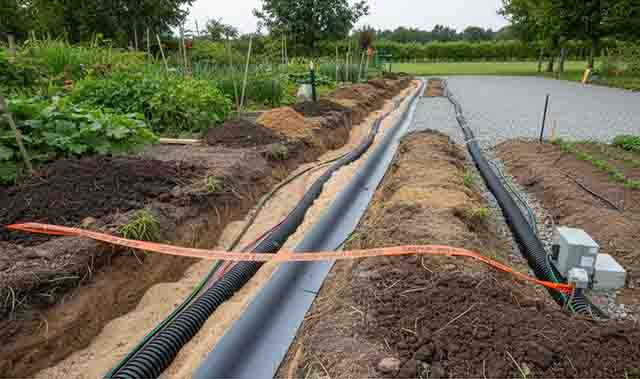
PVC corrugated conduit: Common, corrosion-resistant, suitable for many underground installations.
HDPE corrugated conduit: Very flexible, excellent chemical resistance, and good for long runs and rugged terrain.
Choose inner diameter to comfortably accommodate the number and size of cables with room for future expansion.
Select wall thickness (and, if applicable, structural ratings) to meet anticipated soil loads and potential abrasion.
Full burial with appropriate backfill (sand layer, filter fabric, or appropriate granular fill)
Outer protection: additional outer sheath or steel-reinforced options where higher load or abrasion is expected
End caps and seals: to prevent water infiltration at terminations
Warning tapes or locate markers to help future excavation

Survey the path of the conduit, existing underground utilities, soil type, moisture, and frost depth (if applicable in your region).
Identify potential obstacles (tree roots, rocks, other conduits) and plan deviations accordingly.
Choose the most direct yet practical route that minimizes sharp bends and heavy loads.
Maintain generous bend radii to prevent kinking and facilitate pulling cables.
Create a simple map of the route, depth targets, backfill plan, and termination points.
Note local code references and AHJ (Authority Having Jurisdiction) requirements.
Corrugated conduit sections, end caps, couplings/connectors
Backfill materials (sand, fine gravel, or prescribed backfill)
Protective sleeves or outer enclosures if needed
Trenching equipment or hand tools
Safety gear (PPE)

Local codes and use case drive depth requirements. Always verify with the AHJ and your local electrical code.
General guidance: deeper burial improves protection against surface disturbances and frost heave; shallower burial is quicker and cheaper but more susceptible to damage.
In residential landscapes and turf areas, typical practical depths range from 12 to 24 inches, depending on wheel load, foot traffic, and future maintenance needs. In driveways or roads, greater depths or additional protective measures are often required.
Layered backfill: start with a soft protective sand or fine granular layer to cushion the conduit, then add compacted fill.
Sand bed under the conduit helps avoid sharp stones or debris that could abrade the wall.
Use warning tape above the conduit to mark the buried line for future excavation.
Protection near roadways or vehicle pathways: consider a rigid conduit sleeve or protective outer sheath if higher mechanical loads are anticipated.
Ensure conduit joints are sealed and water-resistant; avoid direct water pooling at terminations.
For long runs, use materials rated for continuous moisture exposure

Dig a trench following the designed route with gentle bends and consistent depth where possible.
Clean the trench floor, lay a sand or soft bedding layer, and verify depth and alignment.
Place the corrugated conduit along the trench, avoiding sharp kinks; use pulling aids if needed.
Join sections with appropriate couplings; seal joints to prevent water ingress.
Add the protective backfill in layers: first a protective sand bed, then the prescribed fill. Avoid excessive compaction directly over the conduit.
Install warning tape at a suitable depth above the conduit and update your route map.
If possible, perform a continuity and insulation resistance check on installed cables after pulling them through.
Tips for a smoother install:
Allow extra length at pull points to ease cable installation.
Avoid sharp 90-degree bends; use large-radius curves to prevent cable damage.
Keep track of joint seals and ensure they’re watertight.
Always follow local electrical codes, building codes, and any regional standards for underground installations.
Check for restrictions or permit requirements for trenching and buried utilities.
De-energize circuits or isolate areas where work is being performed.
Use appropriate PPE and trench safety practices; ensure trench walls are secure during work.
Verify all existing underground utilities before digging (call before you dig as required in many regions).
Plan for periodic inspection, especially in areas with heavy traffic or potential ground movement.
Replace or upgrade sections as needed to prevent moisture ingress or mechanical damage.
Flexible routing, cost-effective, quicker installation in complex landscapes
Good moisture resistance with proper sealing and backfill
Suitable for a range of low- to medium-load applications
May require protective measures in high-load areas (driveways, industrial yards)
Long-term performance depends on soil conditions and accurate burial depth
Needs correct sizing and professional installation to avoid future issues
Confirm the conduit material (PVC vs. HDPE) and ensure it’s rated for underground use.
Check wall thickness and mechanical ratings appropriate for expected soil load and future expansion.
Ensure compatible connectors, end caps, and seals are available from the same manufacturer.
Keep access points marked and documented for future repairs or upgrades.
Inspect exposed terminations and ensure seals remain intact over time.
If signs of moisture intrusion or physical damage appear, assess and repair promptly.
Buried corrugated conduit can deliver a practical, cost-effective solution for underground electrical and communications wiring when you select the right material, design for the expected loads, and follow local codes. The key to success is careful planning, appropriate burial depth, robust protection, and meticulous installation. With the right approach, your underground network will be protected, accessible, and ready for future upgrades.


